Back up MongoDB on Kubernetes
You can use the instructions on this page to create pre and post backup rules with Portworx Backup, which take application-consistent backups for MongoDB on Kubernetes in production.
MongoDB stores data files in a location called dbPath. dbPath is most often configured to use /var/lib/mongo. Some container images may also configure this path differently, so it is important to pay attention to dbPath.
When deployed with more than a single node, MongoDB has an additional component called Oplog that should be considered during backup. The MongoDB Oplog is a special capped collection that keeps a rolling record of all operations that modify the data stored in your databases. The Oplog can also be used for database recovery. Because the Oplog recovery can take a very long time, MongoDB usually is combined with regular database snapshots.
Installation
Prerequisites
- MongoDB pods should use the label
app=mongodbfor this example. - If MongoDB is using oplog, you need a persistent location to dump oplog. The location
/data/oplogis used in this example.
Create rules for MongoDB
Create rules for MongoDB that run both before and after the backup operation runs:
Create a pre-exec backup rule for MongoDB
Portworx Backup should flush writes to disk and lock the database to ensure a consistent backup. This is done using the db.fsyncLock() method.
-
From the home page, navigate to Settings >Rules > Add New.
-
In the Add Rule window, provide the following details:
-
Rule name: add a name for your backup rule
-
Pod Selector: add the following app label
app=mongodb -
Container: This field is mandatory if you're using mTLS with the Linkerd service mesh, provide the container name. Otherwise, leave this field blank.
-
Action: add the following action based on MongoDB version:
-
If you are on MongoDB version below 7.0:
mongo --eval "printjson(db.fsyncLock())" -
If you are on MongoDB version 7.0 and above:
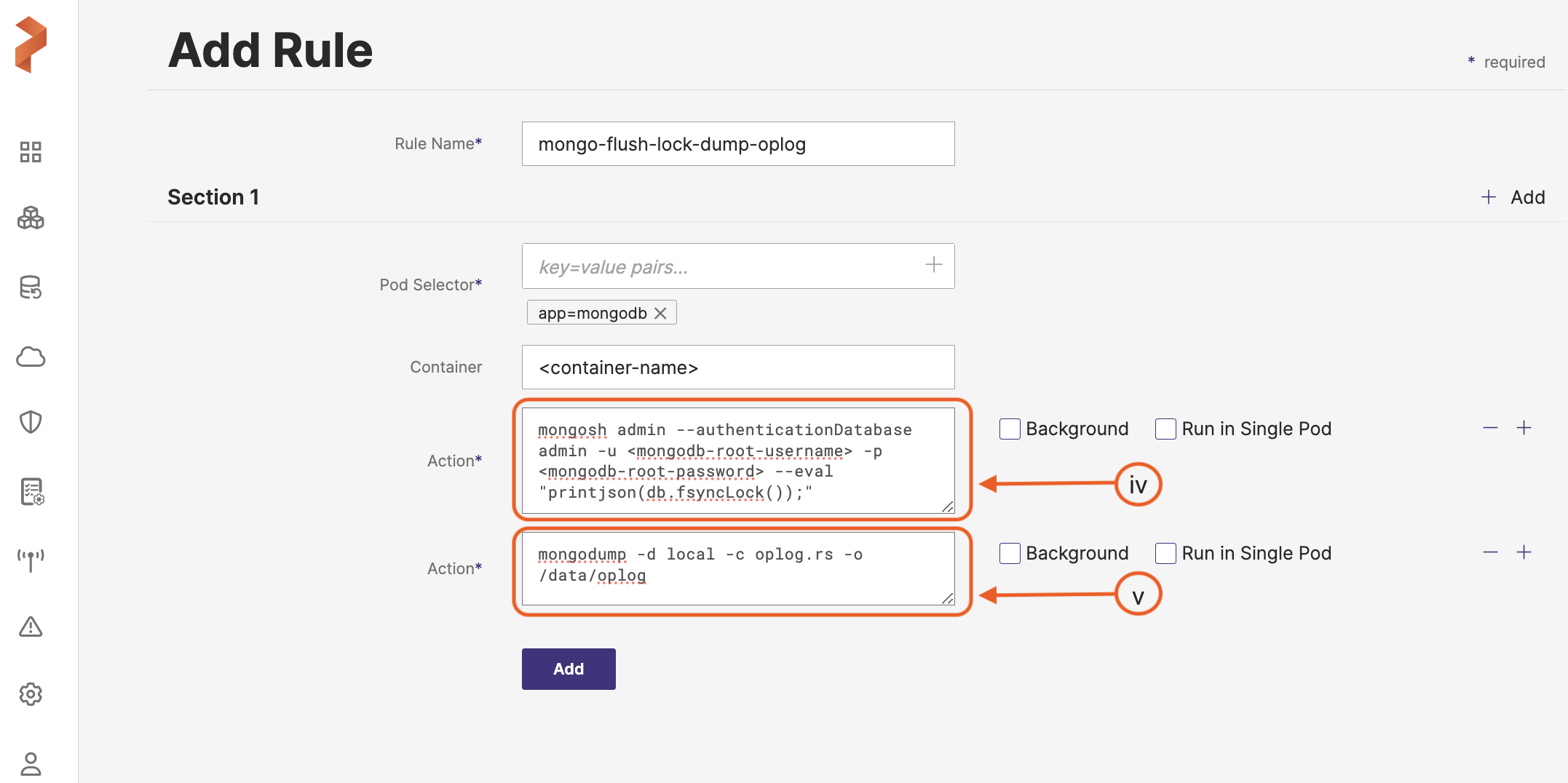
mongosh admin --authenticationDatabase admin -u <mongodb-root-username> -p <mongodb-root-password> --eval "printjson(db.fsyncLock());"
-
Click on + icon (that is inline with the Action field) to add the second action if you are using Oplog:
Add the following command in the Action field to dump Oplog for alternate database recovery.
mongodump -d local -c oplog.rs -o /data/oplog
-
Create a post-exec backup rule for MongoDB
Create a post-backup action that administratively releases the lock on the database following your pre-backup db.fsyncLock() operation.
-
From the home page, navigate to Settings > Rules > Add New.
-
In the Add Rule window, provide the following details:
-
Rule name: add a name for your backup rule
-
Pod Selector: add the following app label
app=mongodb -
Container: This field is mandatory if you're using mTLS with the Linkerd service mesh, provide the container name. Otherwise, leave this field blank.
-
Action: add the following action based on your MongoDB version:
-
If you are on MongoDB version below 7.0:
mongo --eval "printjson(db.fsyncUnlock())" -
If you are on MongoDB version 7.0 and above:
mongosh admin --authenticationDatabase admin -u <mongodb-root-username> -p <mongodb-root-password> --eval "printjson(db.fsyncUnlock());"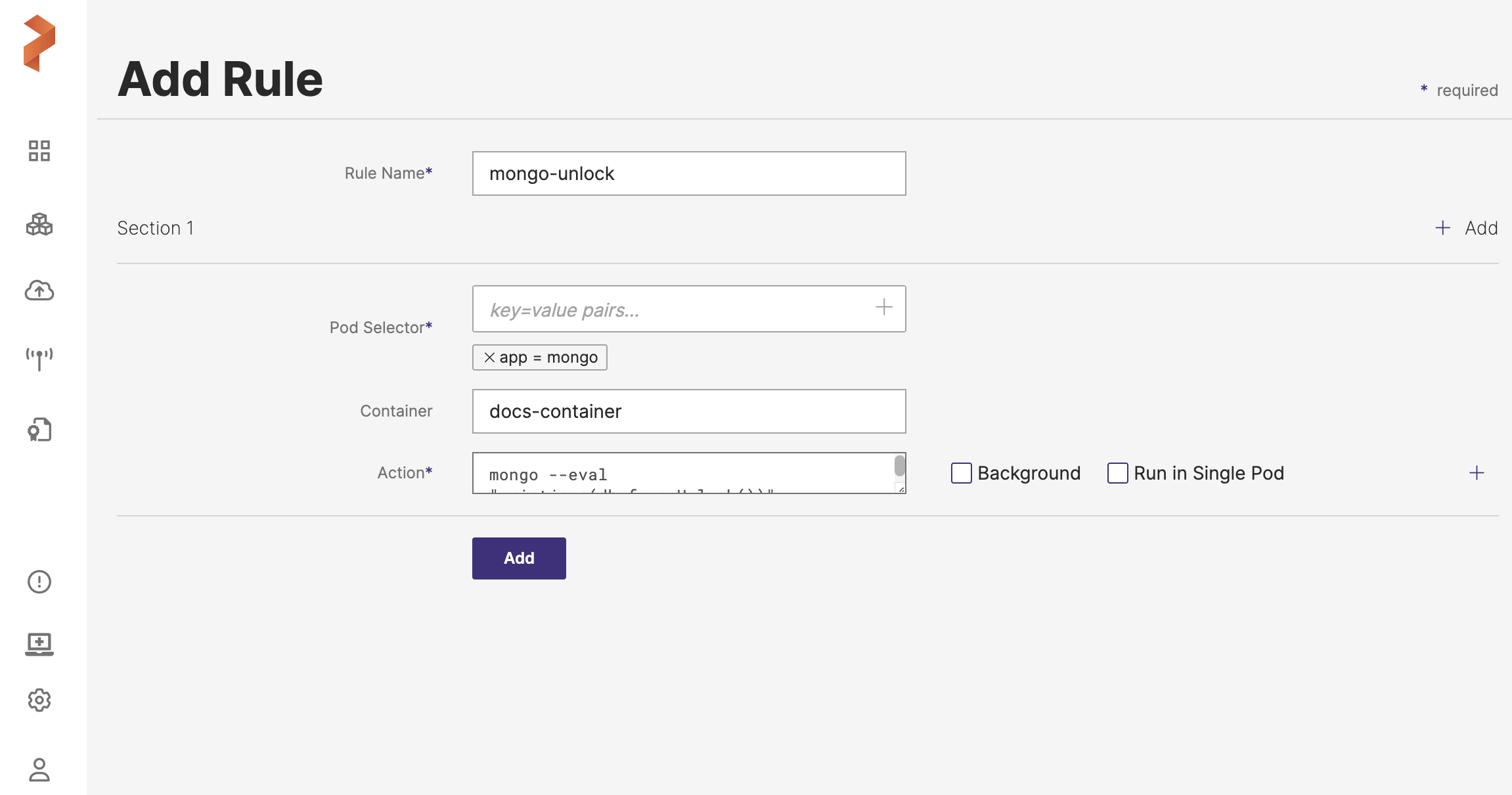
-
-
Use the rules during backup of MongoDB
-
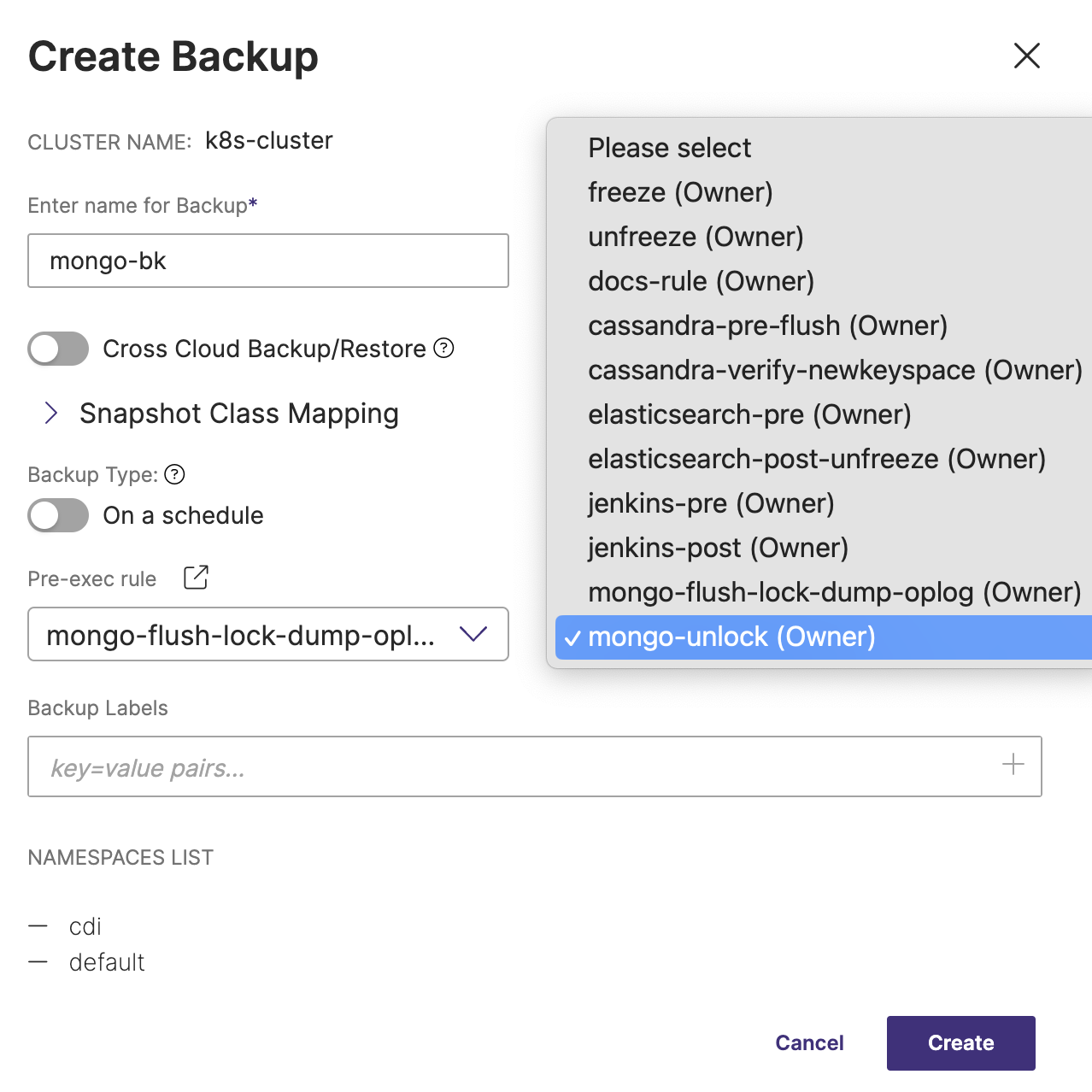
During the backup creation process, select the rules in the pre-exec and post-exec drop-down lists:
-
After you populate all the fields of the Create Backup window, click Create.